Worldly Indeterminacy
About the Project
How many deaths were prevented by the COVID-19 measures in Switzerland? If all gasoline-powered cars were banned worldwide from 2025, what would be the impact on the global temperature? These questions refer to scenarios that are, at least to some extent, indeterminate. It is rather uncontroversial that the number of COVID-19 related deaths in Switzerland would have been higher if there had been no COVID-19 measures. However, the exact number of deaths that would have occurred cannot be determined. And while it is undisputed that CO2 emissions from cars have an impact on global warming, the exact temperature difference that would result from a total ban on gasoline-powered cars cannot be determined. A standard response here is that these inaccuracies are merely epistemic, and that if one could take the viewpoint of a cognitively unlimited being, one would be able to fully determine the effects of COVID-19 measures and CO2 emissions.
However, there is an emerging debate in contemporary metaphysics that there may be worldly indeterminacy. The world itself may be indeterminate, regardless of how much we know. While the general idea of worldly indeterminacy has been discussed for some time, there are two types of worldly indeterminacy that are just beginning to be explored. First, there is indeterminacy about causation and prevention: there may be cases where it is indeterminate whether one event caused or prevented another event. Second, there is indeterminacy about the laws of nature: it may be indeterminate what the laws of nature are and whether certain states of affairs or scenarios are nomologically possible. These two kinds of indeterminacy are closely related to the notion of future indeterminacy, the widespread intuition that the future state of the world is indetermined at the present moment.
This project seeks to open up new directions in the debate on worldly indeterminacy. First, it gives reasons why causal, nomic, and future indeterminacy should indeed be regarded as kinds of worldly indeterminacy, and develops theories of causation and lawhood that take this observation into account. Second, it builds an intradisciplinary bridge between these metaphysical theories and theories of normative judgement. How can actions or measures be evaluated normatively when it is indeterminate what exactly they have caused or prevented? More generally, what is the relationship between normative facts and non-normative facts if non-normative facts can be indeterminate? By addressing these questions, the project will shed new light on the ethical evaluation of hypothetical scenarios that are relevant to areas of societal concern, such as scenarios in health ethics or climate ethics.
About the People
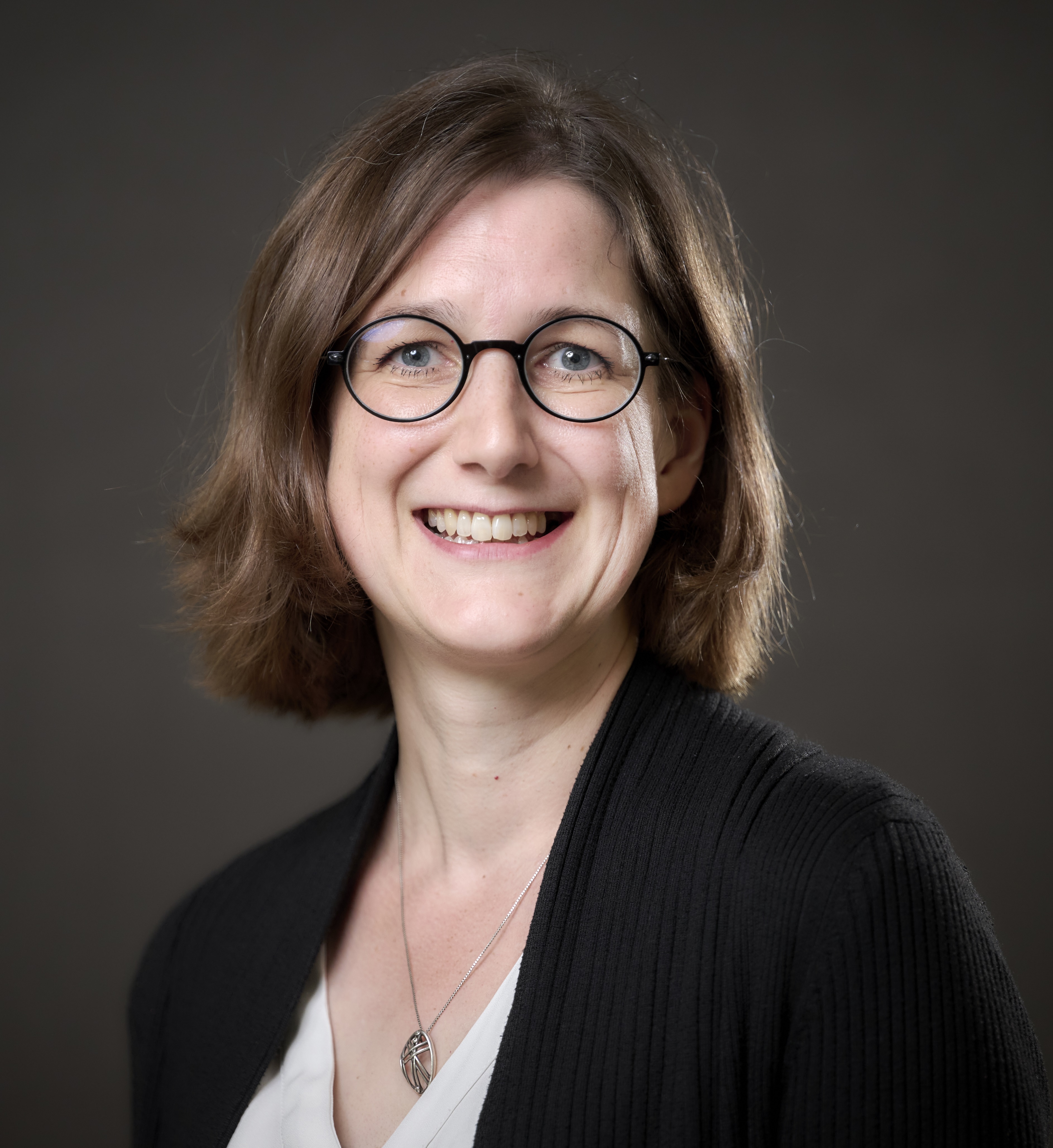 Prof. Dr. Vera Hoffmann-Kolss
Vera Hoffmann-Kolss is interested in topics in the metaphysics of science, with a focus on causation and causal models. She participates in current debates about degrees of causal contribution and causal indeterminacy, and investigates the relationship between causation and responsibility. She has also worked on the metaphysics of properties, ontological levels, and the mind-body problem (and still occasionally works in these areas).
Vera Hoffmann-Kolss’ personal website.Dr. Jonas Werner
Jonas Werner is part of the project Worldly Indeterminacy since its inception and he was employed in it as a postdoctoral researcher until September 2025. Since October 2025, he is a guest professor at Humboldt-Universität zu Berlin. In his research he focuses on analytic metaphysics. Jonas enjoys thinking about modality, mereology, and worldly indeterminacy. He also works on questions in philosophy of language, epistemology, philosophy of mind, philosophy of religion, as well as moral philosophy and meta-ethics.
Jonas had previously worked as a postdoc in Bern from 2020 to 2023. Between his positions in Bern, he was a postdoctoral fellow at the Massachusetts Institute of Technology for one and a half years. He completed his PhD at the University of Hamburg, where he worked on essence and grounding.
Jonas Werner on Philpeople.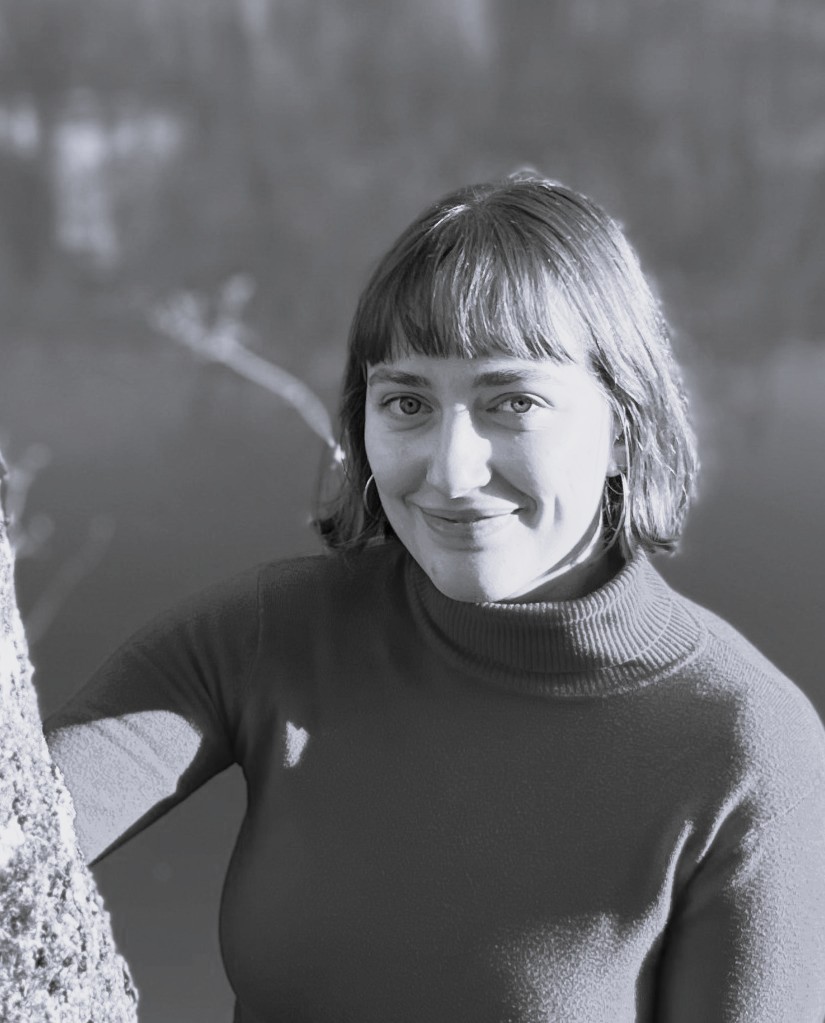 Mara Zschommler
Mara Zschommler is a PhD student in philosophy at the University of Bern. She started working on the Worldly Indeterminacy project in winter 2025.
Mara Zschommler on the website of the Institute of Philosophy at the University of Bern.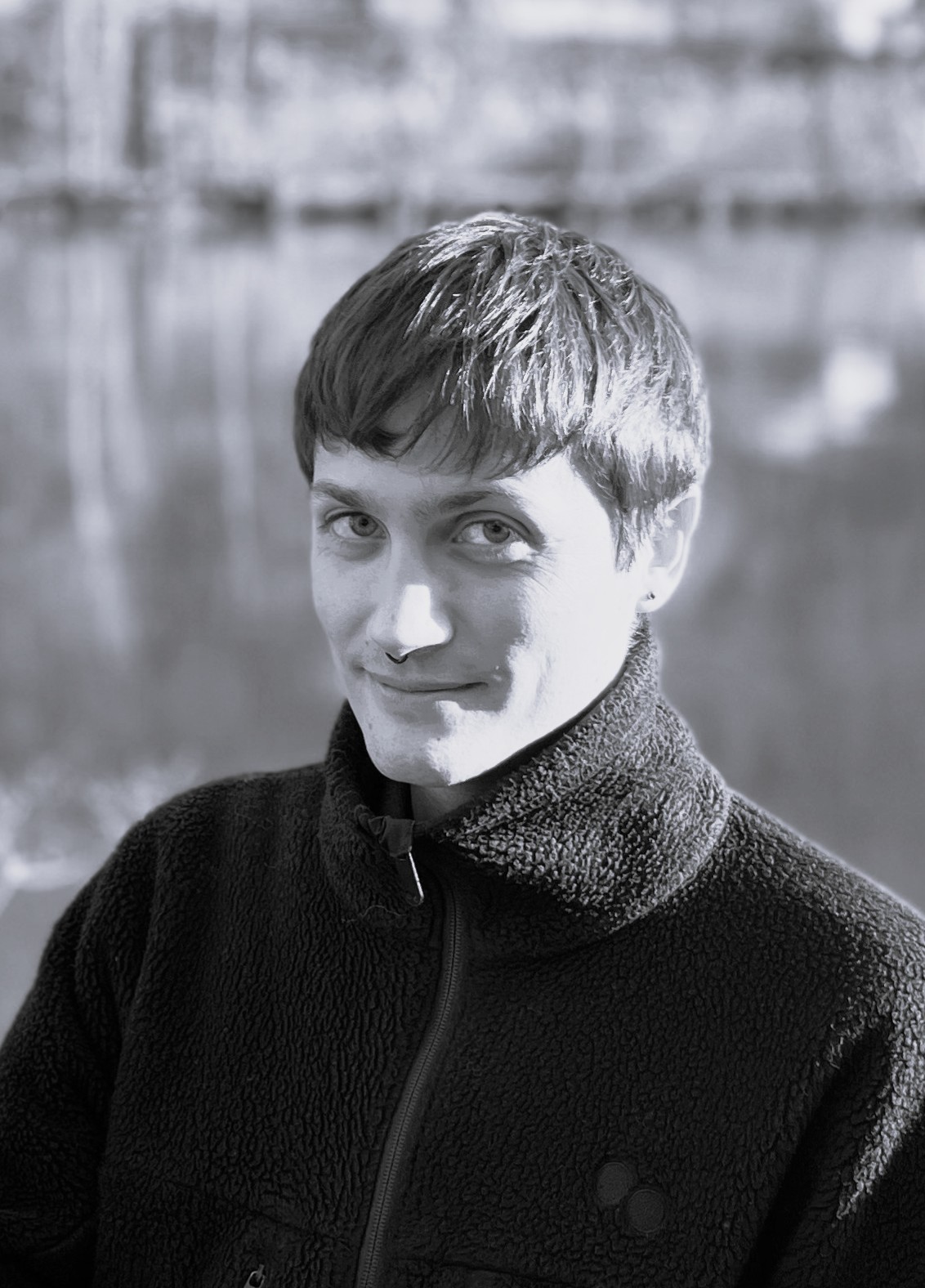 Sven Hirsbrunner
Sven Hirsbrunner is a PhD student in philosophy at the University of Bern. He started working on the Worldly Indeterminacy project in spring 2025.
Sven Hirsbrunner on the website of the Institute of Philosophy at the University of Bern.Events
Fellowship by Eddy Keming Chen
September 14 – 18, 2026
Reading Group (1)
Monday, September 14, 2026
University of Bern, Unitobler, Lerchenweg 36, Room F 001
10:15 a.m. – 12:00 p.m.- In the first reading group, we will discuss Chen, E.K. (2022), ‘Fundamental Nomic Vagueness.’ Philosophical Review 131(1): 1–49.
- Students are also most welcome to participate in the reading groups!
- You can find the paper we will be discussing here.
Public Lecture by Eddy Keming Chen: “The Case for Artificial General Intelligence”
Tuesday, September 15, 2026
University of Bern, Hauptgebäude, Hochschulstrasse 4, Room 101
10:15 a.m. – 12:00 p.m.- Abstract:
In 1950, Alan Turing asked whether machines could show the kind of broad and flexible intelligence we associate with human thought. For decades, such artificial general intelligence (AGI) seemed like a future milestone. This talk argues that AGI has already arrived. Today’s frontier AI systems can reason, code, use tools, solve difficult scientific and mathematical problems, and communicate across many domains at a human level or beyond. They are not perfect or human-like in every way, but those are not requirements for general intelligence. Insofar as individual humans have general intelligence, frontier AI systems do too. We are no longer the only generally intelligent beings on Earth. Like the Copernican and Darwinian revolutions before it, this moment invites us to rethink our place in the world and the nature of mind. (Based on joint work with Mikhail Belkin, Leon Bergen, and David Danks, ‘Does AI Already Have Human-Level Intelligence? The Evidence is Clear.’ Nature, 2026) Reading Group (2)
Wednesday, September 16, 2026
University of Bern, Unitobler, Lerchenweg 36, Room F 006
2:15 p.m. – 4:00 p.m.- In the second reading group, we will discuss Chen, E.K. and Rubio, D. (forthcoming), ‘Evil and the Quantum Multiverse.’ Australasian Journal of Philosophy.
- Students are also most welcome to participate in the reading groups!
- You can find the paper we will be discussing here.
Workshop: “Indeterminacy in Physics and Beyond”
September 17 and 18, 2026
University of Bern, Mittelstrasse 43, Room 320- Abstract:
This workshop explores new directions in the recent debate on ontological indeterminacy. There has been a long-standing debate about whether fundamental physics leads to indeterminacy. Recently, however, the idea that there may be other types of worldly indeterminacy as well is receiving growing attention. Eddy Keming Chen argues that there may be nomic indeterminacy. Other arguments suggest that there may be causal indeterminacy and that future indeterminacy is not just due to epistemic limitations, but a real feature of the world.
The goal of this workshop is to determine where indeterminacy exists in the world and what this implies for our interpretation of fundamental physics and broader topics in metaphysics and the philosophy of science, such as theories of the laws of nature, theories of causation, and time and the future. - Here you can find the detailed workshop program, including the abstracts of the talks.
Outreach & Publications
tba

